
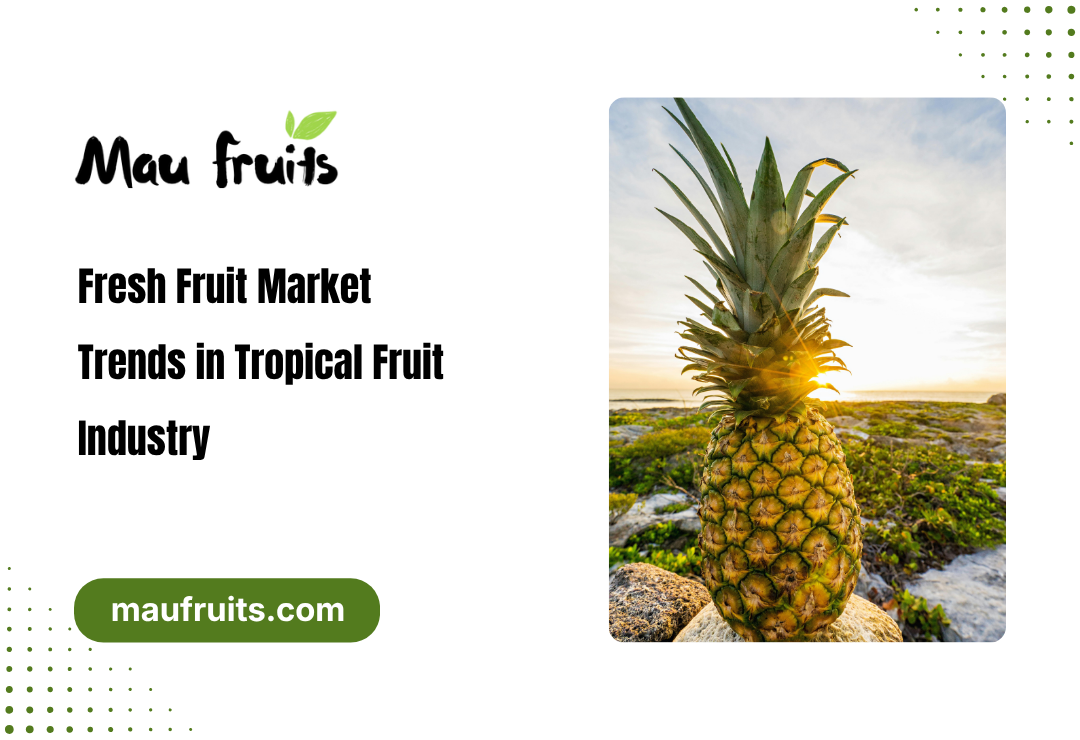
The tropical fruit industry is in the midst of a transformation more profound and more commercially consequential than anything it has experienced in its modern history. The fresh fruit market trends reshaping the sector today are not incremental adjustments to an otherwise stable commercial landscape. They are fundamental shifts in consumer behavior, retail structure, supply chain technology, sustainability expectations, and geographic demand distribution that together are redefining what the global tropical fruit industry produces, how it produces it, where it sells, and what quality, price, and provenance mean in the fresh fruit marketplace of the twenty-first century. Understanding these fresh fruit market trends is essential for every participant in the tropical fruit supply chain, from smallholder farmers in East Africa and Central America to premium retail buyers in London, Tokyo, and Dubai, and for every consumer seeking to make informed choices about the tropical fruits they enjoy every day.
At Mau Fruits, we operate at the intersection of these fresh fruit market trends, sourcing and supplying the world’s finest premium tropical fruits including MD2 pineapple, applemango, and Hass avocado through supply chains that are actively shaped by and responsive to the forces described in this guide. This complete analysis examines the eight most significant fresh fruit market trends currently reshaping the tropical fruit industry, the commercial implications of each for producers, traders, and consumers, and the outlook for a sector whose growth trajectory remains among the most compelling in global food commerce.
The Context: Why Fresh Fruit Market Trends Matter More Than Ever
The global fresh fruit market was valued at over USD 400 billion in 2023, with tropical fruits representing one of the fastest-growing and highest-value segments within this total. The tropical fresh fruit category has outpaced overall fresh produce market growth consistently for two decades, driven by the structural demand drivers described throughout this guide. But this growth has also attracted significant competitive pressure, regulatory scrutiny, and consumer expectations that are raising the bar for quality, sustainability, and supply chain transparency in ways that require every industry participant to adapt more rapidly and more comprehensively than at any previous point in the sector’s development.
The fresh fruit market trends operating across the tropical industry today are not temporary phenomena driven by short-term consumer fashion cycles. They are expressions of deep, durable structural changes in how people think about food, health, environment, and the ethical dimensions of agricultural commodity trade that will continue to shape the industry’s commercial landscape for decades. Understanding them with clarity and acting on them with conviction is the foundation of competitive advantage in the modern tropical fresh fruit market. Learn more about how we engage with these trends in our sourcing approach at our About Us page.
8 Fresh Fruit Market Trends Reshaping the Tropical Fruit Industry
1. Health Positioning Is the Most Powerful Fresh Fruit Market Trend of the Modern Era
The most powerful and most commercially impactful of all current fresh fruit market trends is the sustained and accelerating shift of consumer food purchasing motivation toward health, nutrition, and functional benefit. Tropical fruits occupy a uniquely favorable position within this trend because they deliver the most compelling combination of genuine nutritional excellence and extraordinary sensory pleasure available anywhere in the fresh produce category. The MD2 pineapple, with its Vitamin C content at 88 percent of the daily recommended intake per cup and its unique bromelain enzyme complex with documented digestive and anti-inflammatory benefits, exemplifies the kind of food that health-conscious modern consumers actively seek out and are willing to pay premium prices for.
The applemango’s exceptional polyphenol antioxidant profile, centered on mangiferin with its documented anti-inflammatory, neuroprotective, and antidiabetic properties, positions it as a genuinely functional food at a time when the line between nutrition and therapeutic benefit is becoming increasingly meaningful to health-motivated consumers. The Hass avocado’s cardiovascular health credentials, built on decades of clinical research documenting its oleic acid content’s effects on blood lipid profiles, blood pressure, and arterial inflammation, have made it one of the most nutritionally credentialed foods in any category, fresh or processed.
Research published by the National Center for Biotechnology Information consistently confirms that regular tropical fruit consumption is associated with significantly better dietary quality, improved cardiovascular health markers, and more favorable metabolic profiles across diverse population studies, providing the scientific foundation that health-motivated consumers in premium market segments need to justify making premium tropical fruits a daily dietary priority rather than an occasional indulgence. This health fresh fruit market trend shows every sign of strengthening rather than moderating as nutritional science continues to accumulate evidence and as health consciousness spreads to new demographic and geographic consumer cohorts globally.
2. Asian Market Emergence Is the Defining Geographic Fresh Fruit Market Trend
The emergence of Asian consumer markets as major and rapidly growing destinations for premium tropical fruits is the most significant geographic fresh fruit market trend of the current decade and will remain so for the next several decades as per-capita tropical fruit consumption in China, India, and Southeast Asian markets converges progressively toward European and North American levels from its currently much lower base. This convergence represents a demand expansion opportunity of extraordinary scale that is already reshaping investment decisions in producing regions with geographic proximity to Asian markets and that will fundamentally alter global tropical fruit trade flows as it develops.
China’s trajectory in premium tropical fruit consumption has been particularly dramatic. Chinese avocado imports grew from negligible volumes in 2010 to over 60,000 metric tons annually by 2022, and multiple industry analysts project continued growth driven by urbanizing middle-class consumers in tier-one and tier-two cities who are adopting premium fresh produce purchasing patterns that closely mirror those observed in Japanese and Korean markets a decade earlier. MD2 pineapple penetration in Chinese premium retail is following a similar growth curve. Applemango, while at an earlier stage of Chinese market development, is attracting growing interest from Chinese premium fruit importers who recognize its extraordinary quality potential and the aspirational premium positioning it can command in the gift fruit and premium fruit retail segments that drive significant value in the Chinese fresh fruit market.
Japan and South Korea are more mature Asian premium tropical fruit markets where established consumer bases for avocado, MD2 pineapple, and premium mango have been growing steadily for over a decade. Southeast Asian markets including Vietnam, Thailand, Indonesia, and the Philippines are at earlier stages of premium tropical fruit market development but show consumption trajectories that closely resemble the patterns observed in Japanese and Korean markets a decade earlier, suggesting sustained fresh fruit market trend momentum across this region for at least the coming decade.
3. Sustainability Is Transitioning from Differentiator to Market Access Requirement as a Fresh Fruit Market Trend
One of the most commercially consequential fresh fruit market trends of the past five years has been the acceleration of sustainability from a premium market differentiator that added value for environmentally conscious buyers into a baseline market access requirement that producers and exporters must meet simply to remain in consideration for the most commercially valuable supply relationships. This transition is being driven simultaneously from the regulatory side, through instruments like the EU Deforestation Regulation and the EU Farm to Fork strategy that are embedding sustainability requirements into the legal frameworks governing fresh produce imports, and from the commercial side, through the progressive embedding of sustainability criteria into the supplier qualification programs of every major European and North American retail buyer.
GlobalG.A.P. certification, which was a premium differentiator in fresh fruit market access a decade ago, is now effectively a baseline requirement for European retail market access across all major tropical fruit categories. Rainforest Alliance certification is rapidly following the same trajectory. Deforestation-free sourcing verification, backed by satellite monitoring and third-party audit, is becoming mandatory rather than aspirational in European premium retail avocado and tropical fruit procurement. And the EU Deforestation Regulation’s requirement that all agricultural commodities including tropical fruits placed on the European market after December 2024 demonstrate that their production has not contributed to deforestation or forest degradation is creating a new layer of compliance requirement that will reshape supply chain documentation practices across the entire tropical fruit export sector.
The sustainability fresh fruit market trend creates both challenge and opportunity. Producers who have invested credibly and comprehensively in sustainability practice and certification will capture better market access, more stable supply relationships, and higher pricing in the most commercially valuable market segments. Those who have not will face progressive market exclusion from premium channels regardless of their fruit’s intrinsic eating quality. According to the Food and Agriculture Organization of the United Nations, sustainable intensification of tropical fruit production systems represents one of the most important pathways to meeting growing global food demand while reducing the agricultural sector’s overall environmental footprint, aligning commercial sustainability incentives with the broader agricultural development agenda.
4. Digital and E-Commerce Channels Are a Transformative Fresh Fruit Market Trend
The rapid growth of digital retail and direct-to-consumer e-commerce channels for fresh food is one of the most structurally significant fresh fruit market trends currently reshaping how tropical fruits reach consumers, particularly in Asian markets where e-commerce adoption in fresh food categories is significantly more advanced than in Western markets. Online fresh fruit subscription services, premium produce delivery platforms, and direct farm-to-consumer digital commerce operations are creating new consumer touchpoints for premium tropical fruits that bypass traditional retail distribution channels entirely and that allow producers and specialty importers to reach quality-focused consumers with compelling quality and provenance storytelling that physical retail shelf space cannot accommodate.
In China, e-commerce platforms including Alibaba’s Tmall Fresh, JD Fresh, and multiple WeChat-based fresh produce stores have become meaningful distribution channels for premium imported tropical fruits, allowing Chinese urban consumers to access MD2 pineapple, premium avocado, and other premium tropical varieties with quality guarantees, provenance information, and consumer education content that builds the category knowledge and purchase confidence that physical retail exposure alone cannot develop as quickly or as effectively. This digital distribution fresh fruit market trend is creating new commercial models for premium tropical fruit marketing that reward investment in digital storytelling, consumer education content, and online quality assurance mechanisms.
5. Premiumization Within Categories Is an Accelerating Fresh Fruit Market Trend
Within the broader tropical fruit fresh fruit market trends, one of the most commercially significant developments is the acceleration of premiumization within individual fruit categories, with premium variety varieties progressively displacing commodity alternatives from the shelf space and consumer consideration that they once commanded by default. This within-category premiumization trend is visible across every major tropical fruit category and is creating structural market share shifts that are effectively permanent once established because the consumer loyalty generated by genuine quality superiority is not easily reversed by price competition from inferior alternatives.
The MD2 pineapple’s complete displacement of the Smooth Cayenne from premium retail pineapple sections in European and North American markets is the most complete and most commercially instructive example of this within-category premiumization fresh fruit market trend. Once consumers experienced MD2 pineapple quality, they returned specifically for it and resisted substitution with inferior alternatives, creating a brand loyalty dynamic that consolidated MD2 pineapple market share at the expense of every competing variety it encountered. The Hass avocado has followed the same trajectory in the avocado category. The applemango is at an earlier stage of the same process in the premium mango category, with its extraordinary quality credentials creating the consumer loyalty foundation that will drive its progressive market share expansion in premium retail mango sections as supply chain development makes consistent availability achievable in more markets. Explore our range of premium tropical varieties at our ingredients and spices collection.
6. Supply Chain Traceability and Transparency Are Core Fresh Fruit Market Trends
Supply chain traceability has evolved from a supplementary quality management tool into one of the most commercially significant fresh fruit market trends reshaping how premium tropical fruit programs are structured, marketed, and commercially differentiated. The drivers of this traceability fresh fruit market trend are multiple and reinforcing: regulatory requirements for food safety traceability under the EU General Food Law and the US Food Safety Modernization Act, retail buyer supplier qualification requirements that include traceability system verification, and consumer demand for provenance transparency that is expressed through both purchasing decisions and brand trust formation.
Leading premium tropical fruit programs are responding to this trend by investing in farm-level digital traceability systems that assign unique codes to individual cartons of fruit, enabling buyers and eventually consumers to access information about the specific farm, harvest date, quality inspection results, and handling history of their fruit through QR code scanning at retail. This digital traceability investment is creating new value and commercial trust in premium tropical fruit programs that strengthens supply chain relationships, reduces quality dispute frequency, supports premium market positioning, and creates consumer engagement opportunities that physical product alone cannot deliver.
7. New Convenience and Processing Formats Expand Fresh Fruit Market Trends Beyond Whole Fruit
One of the most commercially significant fresh fruit market trends extending the demand base for premium tropical fruits beyond traditional whole fruit retail is the rapid growth of processed and convenience format products that make premium tropical fruit accessible in new consumption occasions, new retail channels, and new consumer segments that fresh whole fruit cannot easily serve. Frozen premium tropical fruit products including frozen diced MD2 pineapple, frozen avocado halves and chunks, and frozen premium mango slices are growing at above-average rates compared to fresh fruit categories, reaching consumers in impulse smoothie occasions, meal kit applications, and foodservice procurement contexts where fresh whole fruit handling is impractical.
Ready-to-eat portioned fresh tropical fruit packs in retail grab-and-go sections, premium tropical fruit juices pressed from premium variety raw material, and premium tropical fruit ingredients in meal kit delivery programs are all additional convenience format fresh fruit market trends that collectively expand the total addressable market for premium tropical varieties beyond the traditional grocery retail aisle and create incremental demand streams that provide supply chain participants with additional revenue channels and commercial planning flexibility.
8. Climate Change Adaptation Is an Emerging Strategic Fresh Fruit Market Trend
Climate change is emerging as one of the most strategically significant fresh fruit market trends in the tropical fruit industry, operating on both the production side through its impact on growing conditions, seasonal patterns, and extreme weather frequency in established avocado farming regions and producing zones, and on the commercial side through its influence on consumer and regulatory sustainability expectations that are reshaping the compliance requirements and market access criteria for premium tropical fruit export programs.
On the production side, changing rainfall patterns, increased temperature variability, and more frequent extreme weather events are altering the risk profiles of established tropical fruit producing regions and creating new growing opportunities in geographic areas previously unsuitable for commercial tropical fruit production. Some established high-altitude avocado producing zones in Mexico and Colombia may face temperature stress as warming trends reduce the natural cooling that currently creates their ideal quality conditions. Coastal producing regions in Morocco, Portugal, and southern Spain may become increasingly viable for avocado and tropical fruit production as temperatures rise. And new frontier producing regions in Ethiopia, Zimbabwe, and other Sub-Saharan African countries may gain competitive advantage as their climatic conditions become more consistently aligned with premium tropical fruit production requirements.
On the commercial side, climate change is intensifying the sustainability compliance requirements that retail buyers embed in their fresh produce procurement programs, creating stronger incentives for carbon footprint measurement and reduction, water management investment, and resilience planning in tropical fruit supply chains that will become increasingly important commercial differentiators as the decade progresses.
How Fresh Fruit Market Trends Are Reshaping the Premium Tropical Fruit Supply Chain
The cumulative impact of these eight fresh fruit market trends is driving fundamental change in the structure, commercial models, and competitive dynamics of the premium tropical fruit supply chain at every level from farm to consumer. Producers are investing in precision agriculture technology, sustainability certification, and digital traceability infrastructure. Exporters are developing direct retail relationships, building sustainability credentials, and investing in cold-chain logistics capabilities that support the quality standards their premium market programs require. Importers and distributors are developing digital consumer engagement capabilities, expanding their premium variety portfolio, and building the Asian market relationships that the geographic fresh fruit market trend demands. And retailers are embedding sustainability criteria, traceability requirements, and quality standard specifications into their supplier programs at a pace and comprehensiveness that is reshaping who can participate in premium fresh fruit market supply and on what commercial terms.
The fresh fruit market trends described in this guide are not threats to be managed but opportunities to be captured by supply chain participants who understand them clearly and act on them decisively. The tropical fruit industry’s growth trajectory is among the most positive in global food commerce, its health positioning has never been stronger, its geographic demand base is expanding to encompass billions of new consumers, and its sustainability transformation is creating the authentic quality credentials that premium market access demands.
For more expert analysis of fresh fruit market trends, premium tropical fruit sourcing, and the commercial forces shaping the global tropical industry, visit the Mau Fruits Blog. Discover our full range of premium tropical fruits at Mau Fruits, or reach out to our expert team through our contact page. We are always here to help you navigate the world of premium tropical fruit with the expertise, passion, and market insight that the finest produce deserves.