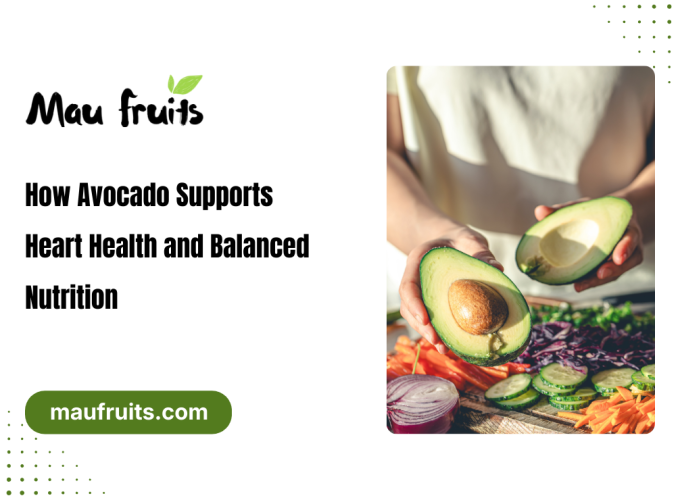

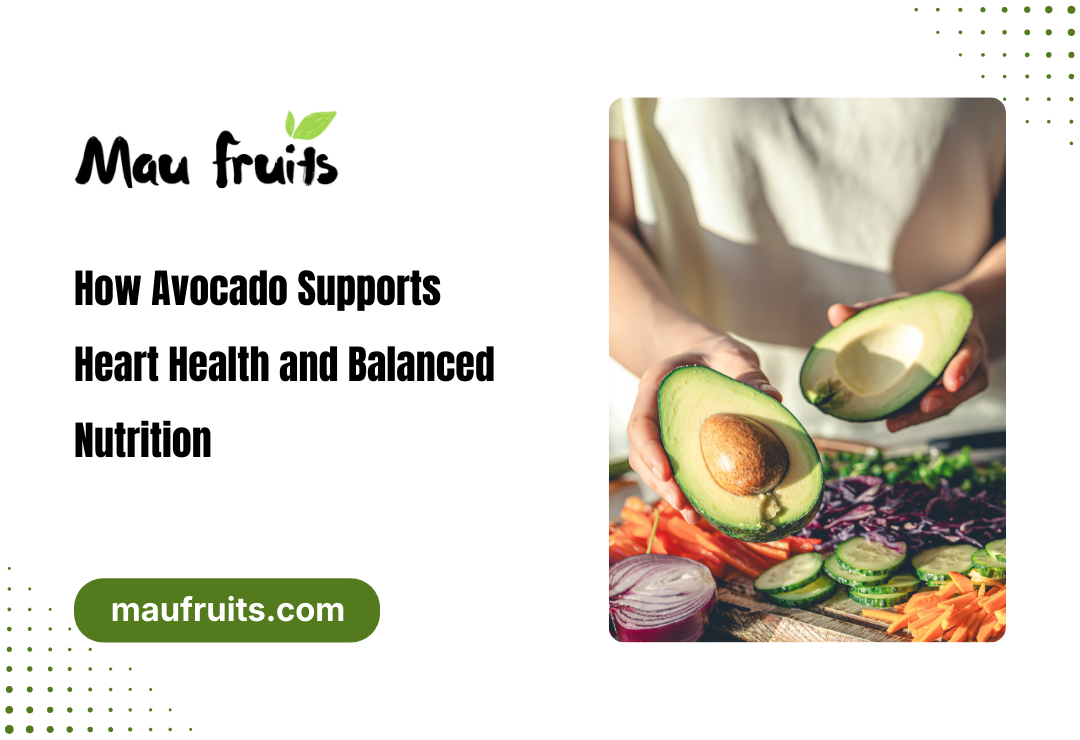
The relationship between avocado and heart health is one of the most thoroughly researched and most consistently supported connections in modern nutritional science. Where many foods earn health reputations through association, tradition, or selective interpretation of limited evidence, the avocado’s cardiovascular credentials are built on a substantial and growing body of rigorous clinical research that has examined its effects on blood lipid profiles, blood pressure, arterial inflammation, and multiple other cardiovascular risk factors with remarkably consistent and positive findings. Avocado heart health benefits are real, they are measurable, and they are delivered through multiple distinct nutritional mechanisms that work together to create a comprehensive cardiovascular protective effect that few single foods can match.
At Mau Fruits, we are passionate about tropical fruits that deliver genuine nutritional value alongside exceptional flavor, and the avocado exemplifies both qualities with unmatched consistency. This complete guide examines how avocado supports heart health and balanced nutrition, the specific nutritional mechanisms through which its cardiovascular benefits are delivered, and the practical dietary strategies that allow you to capture these benefits most effectively in your daily eating.
Why Avocado Is a Uniquely Powerful Heart Health Food
The avocado’s status as a uniquely powerful heart health food is the result of a nutritional profile that addresses cardiovascular risk through multiple simultaneous pathways rather than a single isolated mechanism. Most foods that are beneficial for heart health work through one or two nutritional mechanisms at most. The avocado works through at least five distinct cardiovascular protective mechanisms simultaneously, creating a synergistic heart health effect that is greater than the sum of its individual nutritional contributions.
What makes this multi-pathway cardiovascular protection particularly valuable is that the major risk factors for heart disease, elevated LDL cholesterol, high blood pressure, chronic arterial inflammation, oxidative stress, and elevated triglycerides, are interrelated but distinct processes that respond to different nutritional interventions. A food that addresses only one of these risk factors leaves the others unmodified. The avocado addresses all five simultaneously, making it one of the most comprehensively cardioprotective whole foods available in any supermarket or fresh produce market in the world.
The foundation of avocado heart health benefits is its exceptional fat profile. The avocado derives approximately 77 percent of its calories from fat, a characteristic that once caused widespread confusion about its health value in an era when all dietary fat was viewed with suspicion. The scientific consensus has since conclusively established that the type of fat matters far more than the total quantity, and the avocado’s fat is overwhelmingly monounsaturated in character, dominated by oleic acid, the same fatty acid that gives extra virgin olive oil its celebrated cardiovascular health credentials. Explore more heart-healthy tropical ingredients at our ingredients and spices collection.
The Nutritional Foundation of Avocado Heart Health
Before examining the specific heart health mechanisms through which avocado works, it is useful to understand the complete nutritional profile that underpins its cardiovascular benefits. One half of a medium Hass avocado, approximately 100 grams, the serving size used in most avocado heart health research, provides the following key nutrients relevant to cardiovascular function:
- Total Fat: 14.7 g, of which 9.8 g is monounsaturated oleic acid
- Dietary Fiber: 6.7 g (soluble and insoluble combined)
- Potassium: 485 mg (10% of daily value)
- Vitamin K: 21 mcg (26% of daily value)
- Folate: 81 mcg (20% of daily value)
- Vitamin E: 2.1 mg (14% of daily value)
- Vitamin C: 10 mg (11% of daily value)
- Magnesium: 29 mg (7% of daily value)
- Copper: 0.19 mg (21% of daily value)
- Vitamin B6: 0.3 mg (18% of daily value)
- Net Carbohydrates: 1.8 g (after subtracting fiber from total carbohydrates)
- Phytosterols: Approximately 76 mg, including beta-sitosterol
- Glutathione: One of the richest whole food sources available
- Polyphenols: Including epicatechin and procyanidins with antioxidant and anti-inflammatory activity
This nutritional profile represents a remarkably comprehensive cardiovascular health package. Oleic acid and fiber address cholesterol management. Potassium supports blood pressure regulation. Vitamin E, Vitamin C, glutathione, and polyphenols provide antioxidant protection against oxidative cardiovascular damage. Folate reduces homocysteine levels. Phytosterols provide additional LDL cholesterol reduction. Each of these nutritional contributions is clinically supported and mechanistically understood, making the avocado heart health case one of the best-evidenced nutritional relationships in all of dietary science.
8 Proven Ways Avocado Supports Heart Health
1. Oleic Acid Improves the Blood Lipid Profile Critical to Avocado Heart Health
The most extensively researched mechanism of avocado heart health benefit is the effect of its dominant fatty acid, oleic acid, on blood lipid profiles. Clinical research has consistently demonstrated that replacing saturated and trans fats in the diet with the monounsaturated oleic acid found in avocado produces a beneficial restructuring of the blood lipid profile that directly reduces cardiovascular disease risk across multiple measurable parameters.
Oleic acid supplementation and avocado-enriched diets have been shown in clinical trials to lower LDL cholesterol, the lipoprotein particle whose oxidation initiates atherosclerotic plaque formation in arterial walls. They raise HDL cholesterol, the protective lipoprotein that transports cholesterol from peripheral tissues back to the liver for processing and excretion, effectively acting as a reverse cholesterol transport system that reduces arterial plaque burden over time. And they lower triglyceride levels in the bloodstream, elevated triglycerides being an independent cardiovascular risk factor associated with increased risk of heart attack and stroke that is often insufficiently addressed by standard dietary interventions. These three simultaneous improvements in the lipid profile represent a comprehensive cardiovascular protective effect that is central to the avocado heart health story.
2. Exceptional Potassium Content Supports Blood Pressure in Avocado Heart Health
High blood pressure, or hypertension, is the single most prevalent modifiable cardiovascular risk factor globally, affecting approximately one billion people worldwide and contributing to heart attack, stroke, heart failure, and kidney disease through its chronic damaging effect on arterial walls and cardiac muscle. The avocado’s exceptional potassium content makes it one of the most practical and enjoyable dietary tools available for supporting healthy blood pressure management as part of a comprehensive avocado heart health strategy.
At 485 milligrams of potassium per 100-gram serving, the avocado exceeds the potassium content of a banana in equal weight and provides 10 percent of the daily recommended potassium intake in a single half-fruit serving. Potassium supports healthy blood pressure through several complementary mechanisms. It promotes the renal excretion of excess sodium, directly reducing one of the most common drivers of elevated blood pressure in populations consuming high-sodium Western diets. It reduces vascular smooth muscle tension, lowering peripheral vascular resistance and blood pressure directly. And it supports normal cardiac electrophysiology, helping maintain the regular heart rhythm that prevents arrhythmias and reduces sudden cardiac event risk.
According to the American Heart Association, increasing dietary potassium intake is one of the most evidence-supported non-pharmacological interventions for reducing blood pressure in hypertensive individuals, and the avocado’s combination of high potassium with low sodium content makes it an ideal food for blood pressure management within a heart-healthy dietary pattern.
3. Dietary Fiber Reduces LDL Cholesterol Through a Second Avocado Heart Health Mechanism
The avocado’s extraordinary dietary fiber content of 6.7 grams per 100-gram serving provides a second, independent LDL cholesterol reduction mechanism that complements and amplifies the direct effect of oleic acid on blood lipid profiles. This fiber-mediated cholesterol reduction pathway works through a completely different biochemical process than the direct fatty acid effect, meaning that the two mechanisms together provide a greater LDL cholesterol reduction than either would achieve alone.
The soluble fiber fraction of avocado’s total fiber content forms a viscous gel in the small intestine that physically binds bile acids, the cholesterol-derived compounds that the liver secretes into the digestive tract to facilitate fat digestion. By binding these bile acids and preventing their reabsorption back into the bloodstream, soluble fiber forces the liver to synthesize new bile acids from circulating LDL cholesterol, progressively drawing down LDL levels in the bloodstream with each meal. Regular dietary fiber intake from avocado and other high-fiber foods creates a sustained bile acid binding effect that cumulatively and meaningfully reduces LDL cholesterol over weeks and months of consistent consumption. This fiber-based avocado heart health mechanism is complementary to statin therapy in individuals managing elevated cholesterol medically, supporting better lipid control outcomes when dietary fiber intake is optimized alongside pharmacological treatment.
4. Phytosterols Provide a Third Avocado Heart Health Cholesterol Reduction Pathway
Avocado is one of the richest whole food sources of phytosterols available in the fresh produce category, containing approximately 76 milligrams of phytosterols per 100-gram serving, dominated by beta-sitosterol. Phytosterols are plant-derived compounds structurally similar to cholesterol that compete with dietary cholesterol for absorption in the small intestine, reducing the proportion of dietary cholesterol that enters the bloodstream and thereby contributing to lower circulating LDL cholesterol levels.
The phytosterol content of avocado provides a third independent LDL cholesterol reduction mechanism that works alongside the oleic acid and dietary fiber pathways described above. While the absolute quantity of phytosterols in a single avocado serving is lower than that found in fortified foods specifically designed to deliver therapeutic phytosterol doses, the combination of phytosterol activity with the simultaneous oleic acid and fiber effects creates an integrated cholesterol management package that makes regular avocado consumption a meaningfully comprehensive avocado heart health dietary strategy.
5. Antioxidant Nutrients Protect Against Oxidative Cardiovascular Damage
Oxidative stress, the imbalance between free radical production and antioxidant defense that damages cellular structures including arterial walls and LDL cholesterol particles, is a central mechanism in the development and progression of atherosclerosis and cardiovascular disease. The avocado’s exceptional antioxidant nutrient content provides meaningful protection against this oxidative damage through several complementary antioxidant pathways that together constitute one of the most important avocado heart health benefits for long-term cardiovascular protection.
Vitamin E in avocado, at 14 percent of the daily recommended intake per serving, is a fat-soluble antioxidant that specifically protects LDL cholesterol particles from oxidative modification in the bloodstream. Oxidized LDL is significantly more atherogenic than unoxidized LDL, more readily taken up by macrophage immune cells in arterial walls to form the foam cells that are the cellular building blocks of atherosclerotic plaques. By protecting LDL particles from oxidation, Vitamin E from avocado reduces the rate of plaque formation beyond what lipid level management alone can achieve.
Glutathione, for which avocado is one of the richest whole food dietary sources available, is the master cellular antioxidant that coordinates the entire antioxidant defense network, recycling Vitamin C and Vitamin E after they have been oxidized in free radical neutralization reactions, enabling them to continue functioning as antioxidants rather than accumulating as spent oxidized compounds. This glutathione-mediated antioxidant recycling amplifies the cardiovascular protective effect of avocado’s Vitamin E and Vitamin C content substantially beyond what their absolute concentrations alone would predict.
6. Anti-Inflammatory Activity Addresses Arterial Inflammation at the Core of Avocado Heart Health
Chronic arterial inflammation is now recognized as a central and independent driver of atherosclerosis and cardiovascular disease that operates alongside and interacts with the lipid accumulation processes that traditional risk factor models have emphasized. The avocado’s anti-inflammatory nutritional properties address this inflammatory dimension of cardiovascular disease risk through multiple mechanisms that make it particularly valuable as part of a comprehensive avocado heart health strategy.
Oleic acid reduces the production of pro-inflammatory cytokines and adhesion molecules in arterial endothelial cells, directly inhibiting the inflammatory signaling that promotes immune cell attachment to arterial walls and initiates the plaque formation process. Avocado’s polyphenol compounds including epicatechin and procyanidins provide additional anti-inflammatory activity through their inhibition of nuclear factor-kappa B, a master inflammatory signaling protein whose activation drives the chronic low-grade inflammation associated with cardiovascular disease progression in Western populations consuming inflammatory dietary patterns.
Research published by the National Center for Biotechnology Information found that avocado consumption was associated with significantly lower levels of C-reactive protein and other inflammatory biomarkers in population studies, confirming that the anti-inflammatory nutritional properties of avocado translate into measurable reductions in systemic inflammation that are directly relevant to cardiovascular disease risk reduction in real-world dietary contexts.
7. Folate Reduces Homocysteine: An Underappreciated Avocado Heart Health Benefit
Elevated blood homocysteine is an independent cardiovascular risk factor that is less widely recognized than cholesterol or blood pressure in public health communications but that is consistently associated in epidemiological research with increased risk of heart attack, stroke, and peripheral arterial disease. Homocysteine is an amino acid produced during the metabolism of methionine, and its accumulation in the bloodstream at elevated levels damages arterial endothelium and promotes the coagulation processes associated with thrombotic cardiovascular events.
Folate is the primary dietary nutrient responsible for converting homocysteine back to methionine through the methylation pathway, and adequate folate intake is the most effective dietary strategy available for maintaining healthy homocysteine levels. The avocado’s folate content of 81 micrograms per 100-gram serving, representing 20 percent of the daily recommended intake, makes it one of the best whole food sources of folate available in the fresh fruit category and supports the homocysteine-lowering avocado heart health benefit that is particularly relevant for individuals with genetic variants in the methylation pathway that increase their vulnerability to elevated homocysteine under conditions of inadequate dietary folate.
8. Avocado Supports Balanced Nutrition That Amplifies Its Heart Health Benefits
The final and perhaps most practically significant way that avocado supports heart health is through its role as a nutritional enhancer for the other heart-healthy foods consumed alongside it. Many of the most powerful cardiovascular-protective compounds in fruits, vegetables, and whole grains are fat-soluble carotenoids, flavonoids, and fat-soluble vitamins whose absorption from the digestive tract into the bloodstream depends on the simultaneous presence of dietary fat.
When avocado is eaten alongside other plant foods rich in these fat-soluble cardiovascular-protective compounds, the avocado’s substantial fat content facilitates their absorption so dramatically that the combined meal delivers far greater cardiovascular benefit than either food would provide alone. Research has demonstrated that adding avocado to salads increases the absorption of lycopene from tomatoes by up to four times, beta-carotene absorption by up to two and a half times, and lutein absorption significantly, all of these being carotenoids with documented roles in reducing cardiovascular disease risk. This nutrient absorption enhancement effect means that the avocado heart health contribution to every meal it is part of extends well beyond the cardiovascular benefits of its own nutrients to include the amplified absorption of cardiovascular-protective compounds from every other plant food on the plate.
Avocado Heart Health in the Context of Balanced Nutrition
The avocado heart health benefits described throughout this guide are most fully realized when avocado is consumed as part of a balanced dietary pattern that provides the full nutritional context in which its cardiovascular protective properties can operate most effectively. The avocado is not a single-ingredient solution to cardiovascular health, and no single food can substitute for the broad dietary quality that long-term heart health requires. But within a balanced dietary pattern emphasizing whole plant foods, lean proteins, and minimal processed food intake, the avocado’s unique combination of cardioprotective nutritional mechanisms makes it genuinely one of the most valuable individual food contributions to cardiovascular health available in the fresh produce category.
The most effective balanced nutrition approach for capturing full avocado heart health benefits incorporates half of a medium avocado daily, consumed with meals containing other plant foods to maximize the nutrient absorption enhancement effect described above. Avocado on whole grain toast with tomatoes and leafy greens at breakfast delivers heart health benefits from oleic acid, fiber, potassium, antioxidants, and enhanced carotenoid absorption simultaneously. Avocado diced into a salad with colorful vegetables at lunch provides the fat-soluble nutrient absorption enhancement that makes the entire salad more cardiovascular-protective. Avocado blended into a smoothie with tropical fruits including apple mango or MD2 pineapple at any time of day adds healthy fat, fiber, and potassium in a form that is as nutritionally comprehensive as it is delicious.
For more expert guides on tropical fruit nutrition, heart health, and balanced eating, visit the Mau Fruits Blog. Discover our premium range of tropical fruits and specialty ingredients at Mau Fruits, learn about our sourcing philosophy on our About Us page, or reach out to our team through our contact page. We are always here to help you enjoy the finest tropical fruits the world has to offer in support of a healthy, balanced, and genuinely nourishing life.