
In a world of extraordinary tropical fruits, the applemango stands apart. Applemango fruit quality is not simply a matter of sweetness or size. It is the product of a rare and precisely balanced combination of flavor complexity, textural refinement, visual distinctiveness, nutritional depth, and post-harvest performance that no other tropical mango variety consistently delivers across all of these dimensions simultaneously. Where other mango varieties may excel in one or two quality attributes, the applemango brings exceptional performance across the full quality spectrum, making it the variety of choice for premium fruit markets, discerning consumers, and culinary professionals who demand the best that the tropical fruit world has to offer.
At Mau Fruits, we source and celebrate the finest tropical fruits available anywhere in the world, and the applemango occupies a special position in our understanding of what premium tropical fruit quality genuinely means. This complete guide examines every dimension of applemango fruit quality that makes it unique among tropical fruits, from its signature flavor profile and texture to its outstanding nutritional credentials and the agronomic characteristics that allow it to deliver consistent quality across seasons and supply chains.
What Is the Applemango?
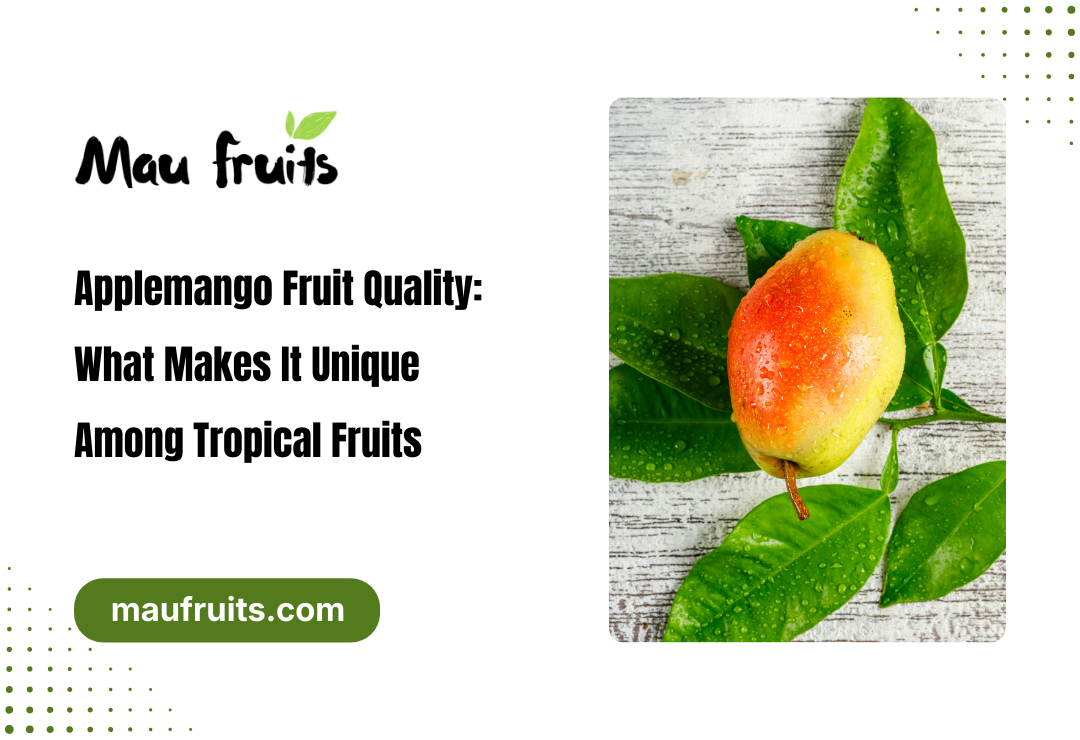
The applemango is a premium mango cultivar celebrated across East Africa, Southeast Asia, and increasingly in international premium fruit markets for its distinctive apple-like roundness, its exceptionally smooth and fiberless flesh, and the rich, honeyed sweetness that has made it one of the most sought-after mango varieties among consumers who have experienced its quality firsthand. The name applemango derives directly from the fruit’s visual profile: its compact, rounded shape and the characteristic blush of red and gold across its skin surface evoke the appearance of a premium dessert apple in a way that immediately distinguishes it from the elongated, kidney-shaped profile of more familiar commercial mango varieties.
The applemango is grown primarily in East African countries including Kenya, Tanzania, and Uganda, where its cultivation is concentrated in coastal and lowland regions with the warm temperatures, high humidity, and well-drained soils that the variety requires for optimal fruit quality development. It is also grown in parts of Southeast Asia, the Indian subcontinent, and the Caribbean, where local climate conditions support the production of applemango with comparable quality characteristics to the finest East African examples. The applemango’s growing international reputation for exceptional fruit quality is driving both expanded production in established growing regions and new cultivation trials in additional tropical locations seeking to capitalize on the premium market positioning the variety commands.
The 7 Quality Characteristics That Make Applemango Unique
1. Applemango Fruit Quality: An Exceptional Flavor Profile
The most immediately and most memorably distinctive aspect of applemango fruit quality is its flavor. The applemango delivers a flavor experience of extraordinary richness and complexity that positions it in a category apart from standard commercial mango varieties. The dominant flavor impression is one of deep, concentrated tropical sweetness, but this sweetness is neither simple nor one-dimensional. It carries layers of complexity that unfold progressively as you eat, revealing notes of ripe peach, honey, fresh citrus, and fragrant floral undertones that together create a flavor profile of genuine sophistication.
This exceptional flavor depth in applemango fruit quality is the result of an unusually high concentration of aromatic volatile compounds, particularly terpenes, esters, and lactones, that develop in the flesh during ripening and that are responsible for the complex fragrance and flavor characteristics that distinguish premium mango varieties from commodity alternatives. The applemango’s aromatic profile is measurably richer than that of many widely traded commercial mango varieties, explaining why consumers who experience applemango fruit quality for the first time so consistently describe it as the finest mango they have ever tasted.
The sweetness of the applemango is complemented by a precisely balanced acidity that prevents the flavor from becoming cloying or flat. This sugar-to-acid ratio is one of the most carefully evaluated dimensions of applemango fruit quality by professional buyers and produces the clean, bright finish on the palate that makes each bite feel refreshing rather than heavy, and that encourages continued eating in a way that less balanced mango varieties cannot sustain across an entire fruit.
2. Applemango Fruit Quality: Fiberless, Buttery Flesh Texture
Texture is a dimension of applemango fruit quality that separates it definitively from many competing mango varieties and that has a profound impact on the eating experience in both fresh and culinary contexts. The flesh of a perfectly ripe applemango is smooth, dense, and almost entirely fiberless, with a buttery, melt-in-the-mouth quality that is more reminiscent of a perfectly ripe avocado or a premium butter pear than the stringy, fibrous texture that plagues many widely traded commercial mango varieties.
The near-complete absence of fiber in applemango flesh is a genetic characteristic of the variety that reflects the specific cellular structure of its mesocarp tissue and distinguishes it from fiber-rich varieties where long cellulose strands running through the flesh create an unpleasant stringing sensation during eating and a messy, tangled preparation experience when cutting and slicing. In culinary applications, the fiberless nature of applemango flesh means that it purees to a perfectly smooth, silky consistency without any residual fibrous texture, blends into smoothies with an exceptionally clean mouthfeel, and can be sliced and presented with the precision and elegance that professional food presentation demands.
3. Applemango Fruit Quality: Distinctive Visual Appeal
The visual profile of the applemango is one of the most commercially significant dimensions of its fruit quality and one of the most immediately recognizable characteristics that distinguishes it from competing mango varieties in retail display environments. The applemango’s compact, rounded form is more symmetrical and more visually harmonious than the irregular, kidney-shaped profile of many familiar commercial mangoes, giving it a cleaner and more premium presentation on the shelf or in a fruit bowl that consumers respond to strongly at the point of purchase.
The skin coloration of the applemango at peak ripeness is particularly striking. A fully ripe applemango displays a warm, rich combination of golden yellow and crimson red across its surface, the precise distribution of these colors varying with growing region, altitude, and sun exposure during fruit development. This bicolor skin presentation has exceptional visual appeal that communicates ripeness, quality, and premium positioning to consumers far more effectively than the uniformly green or dull yellow skin of commodity mango varieties. The applemango’s visual distinctiveness is not merely aesthetic. It is a genuine quality signal that reflects the fruit’s internal ripeness status and the care taken in its production. Explore more premium tropical fruits with exceptional visual and flavor profiles at our ingredients and spices collection.
4. Applemango Fruit Quality: Outstanding Nutritional Profile
The nutritional credentials of the applemango are a core dimension of its fruit quality that is increasingly important to health-conscious consumers in premium markets worldwide. The applemango delivers an outstanding array of vitamins, minerals, dietary fiber, and bioactive plant compounds that make it a genuinely functional food as well as an extraordinary sensory experience. One cup of diced applemango, approximately 165 grams, provides the following key nutritional contributions:
- Calories: 99 kcal
- Vitamin C: 60 mg (67% of daily value)
- Vitamin A (from beta-carotene): 89 mcg RAE (10% of daily value)
- Folate: 71 mcg (18% of daily value)
- Vitamin B6: 0.28 mg (16% of daily value)
- Vitamin E: 1.8 mg (12% of daily value)
- Vitamin K: 6.9 mcg (6% of daily value)
- Potassium: 277 mg (6% of daily value)
- Copper: 0.23 mg (26% of daily value)
- Dietary Fiber: 2.6 g (9% of daily value)
- Natural Sugars: 22.5 g
- Polyphenols: Including mangiferin, quercetin, and kaempferol
The applemango’s Vitamin C content at 67 percent of the daily recommended intake per cup makes it an outstanding immune support food. Its folate content at 18 percent of the daily value supports DNA synthesis, cell division, and fetal development, making it particularly valuable for pregnant women. Its copper content at 26 percent of the daily value supports the development of collagen, red blood cells, and neurological function. And its polyphenol content, including the mango-specific compound mangiferin that has attracted significant research interest for its anti-inflammatory, antioxidant, and potential anti-diabetic properties, adds a bioactive dimension to applemango fruit quality that extends well beyond its basic micronutrient profile. Research published by the National Center for Biotechnology Information highlights the remarkable antioxidant and anti-inflammatory activity of mango polyphenols including mangiferin, supporting the case for regular mango consumption as part of a health-promoting dietary pattern.
5. Applemango Fruit Quality: Superior Post-Harvest Performance
Post-harvest performance is a dimension of applemango fruit quality that is critically important to every participant in the supply chain between the farm and the consumer but that is rarely discussed in consumer-facing communications about fruit quality. The applemango’s post-harvest characteristics, including its shelf life, its ripening behavior, its resistance to post-harvest disease pressure, and its tolerance of the cold-chain handling conditions required for international trade, are as important to the commercial viability of the variety in international premium markets as its eating quality and nutritional profile.
The applemango demonstrates good post-harvest life when harvested at the appropriate maturity stage and handled within recommended cold-chain temperature ranges of 10 to 13 degrees Celsius. It ripens evenly and predictably after harvest, transitioning from firm-mature to fully ripe over a manageable window of five to ten days at ambient temperatures that allows supply chain participants to plan distribution and retail presentation with reasonable confidence. This predictable ripening behavior is a significant advantage over varieties with erratic or highly variable post-harvest ripening trajectories that create quality inconsistency at the consumer level and commercial planning challenges for retailers and foodservice operators.
6. Applemango Fruit Quality: Compact Size and Excellent Flesh-to-Seed Ratio
The physical dimensions of the applemango contribute meaningfully to its overall fruit quality assessment in both commercial and consumer contexts. The applemango’s compact, rounded form factor carries a relatively small central seed in proportion to its total fruit mass, creating a flesh-to-seed ratio that is favorable compared to many commercial mango varieties where a large, flat seed occupies a disproportionate volume of the fruit and reduces the amount of edible flesh available per unit of purchase weight.
This favorable flesh-to-seed ratio is commercially significant because it directly affects the value delivered to the consumer per unit of purchase price. A consumer buying an applemango gets a higher proportion of edible, premium-quality flesh per fruit purchased than they would from many competing mango varieties of similar external dimensions. In foodservice and food manufacturing contexts, where yield from purchased fruit is a direct component of recipe costing and operational efficiency, the applemango’s favorable flesh ratio makes it a more economically attractive raw material choice that supports both quality and cost management simultaneously.
7. Applemango Fruit Quality: Exceptional Culinary Versatility
The culinary versatility of the applemango is the seventh and final dimension of its unique fruit quality profile, and it is one that makes it particularly valuable to professional chefs, home cooks, and food manufacturers seeking a premium tropical fruit ingredient that performs brilliantly across a wide range of culinary applications without modification or compromise. The applemango’s fiberless, buttery flesh, its precisely balanced sugar and acid profile, its rich aromatic character, and its dense, consistent texture make it adaptable to fresh, cooked, frozen, and processed applications in ways that fibrous or poorly textured mango varieties simply cannot replicate.
Eaten fresh, the applemango requires nothing more than careful slicing to deliver a premium eating experience that stands entirely on its own. In smoothies and juices, its smooth flesh blends to a silky, intensely flavored puree that elevates any preparation it joins. In salads, its clean bite-sized dice holds its shape without collapsing, while its flavor complements both savory and sweet accompaniments with equal elegance. In sauces, chutneys, and marinades, its natural sweetness and acidity balance provide flavor depth and complexity that processed flavor additions cannot replicate. In desserts from sorbets and ice creams to tarts and pavlovas, its concentrated flavor intensity and smooth texture deliver results of exceptional quality that make it the preferred choice of pastry professionals who have access to its premium quality. Learn more about exceptional tropical ingredients on the Mau Fruits Blog.
How Applemango Fruit Quality Compares to Other Tropical Mango Varieties
Understanding how applemango fruit quality positions relative to other well-known tropical mango varieties helps to contextualize the specific advantages that make it unique. The Alphonso mango of India, widely considered among the world’s finest mango varieties, delivers extraordinary flavor depth and rich saffron-colored flesh that rivals the applemango in aromatic complexity. However, the Alphonso’s highly seasonal availability, fragile post-harvest handling requirements, and premium price positioning limit its accessibility in international markets where the applemango’s more robust handling characteristics and wider seasonal availability offer practical commercial advantages.
The Tommy Atkins mango, which dominates much of the global volume mango trade from Latin American and North American producing regions, offers excellent post-harvest life and visual appeal but delivers applemango fruit quality comparisons that consistently favor the applemango across flavor intensity, flesh texture, and aromatic richness. The Tommy Atkins is a commercially practical variety rather than a gastronomically exceptional one, and consumers who have experienced applemango fruit quality consistently rate it above Tommy Atkins on every eating quality dimension.
The Kent mango, another significant volume variety from Peru and Mexico, offers better eating quality than the Tommy Atkins with lower fiber content and good sweetness, but still falls short of applemango fruit quality in terms of aromatic complexity, flesh texture refinement, and the distinctive visual profile that makes the applemango immediately recognizable and desirable at the point of purchase. The applemango’s consistent superiority across multiple quality dimensions compared to the volume varieties that dominate international mango trade is the foundation of its premium market positioning and the commercial justification for the price premium it commands in the markets where it is available.
Selecting and Storing Applemango for Peak Fruit Quality
Capturing the full quality potential of applemango at home requires attention to selection and storage practices that preserve the exceptional characteristics of the variety from market to table. Select applemango fruit that feels slightly firm but yields gently to moderate pressure at its widest point, indicating approaching peak ripeness. The skin should show well-developed golden yellow and red coloration without green patches or soft sunken spots. The fruit should feel heavy for its size, indicating dense, well-developed flesh, and should produce a mild, sweet, tropical fragrance at the stem end when fully ripe.
Store unripe applemango at room temperature between 20 and 25 degrees Celsius, away from direct sunlight, and allow it to ripen naturally over three to six days. To accelerate ripening, place the applemango in a paper bag with a ripe apple or banana, whose ethylene emissions will concentrate inside the bag and speed the ripening process by one to two days. Once fully ripe, transfer the applemango immediately to the refrigerator where temperatures between 10 and 13 degrees Celsius will slow further ripening and preserve peak quality for an additional two to four days.
Cut applemango should be stored in an airtight container in the refrigerator and consumed within two days to capture its applemango fruit quality at its best before oxidation and enzymatic browning begin to diminish the flavor intensity and visual appeal that make it so exceptional. A squeeze of fresh lime juice over cut surfaces will slow browning and add a complementary citrus note that enhances rather than masks the applemango’s natural flavor.
Why Applemango Fruit Quality Belongs in Every Premium Fruit Selection
The applemango’s unique combination of flavor complexity, textural refinement, visual distinctiveness, nutritional depth, post-harvest reliability, and culinary versatility makes it the defining choice for any premium tropical fruit selection. According to Healthline, mangoes are among the most nutritionally comprehensive tropical fruits available, and the applemango represents the premium expression of everything that makes the mango genus so nutritionally and gastronomically exceptional.
For consumers discovering the applemango for the first time, the experience is invariably one of genuine surprise and delight. The gap between applemango fruit quality and the commodity mango experience that most international consumers are familiar with is wide enough to feel transformative rather than incremental, creating the kind of loyal repeat purchasing behavior that premium fruit producers and retailers prize above all other commercial metrics. For consumers already familiar with applemango fruit quality, it is simply the standard against which all other mango varieties are measured and found wanting.
For more expert guides on premium tropical fruit quality, seasonal availability, and the finest tropical produce available from around the world, visit the Mau Fruits Blog. Discover our premium range of tropical fruits at Mau Fruits, learn about our sourcing values on our About Us page, or reach out to our expert team through our contact page. We are always here to help you find and enjoy the finest tropical fruits the world has to offer.